
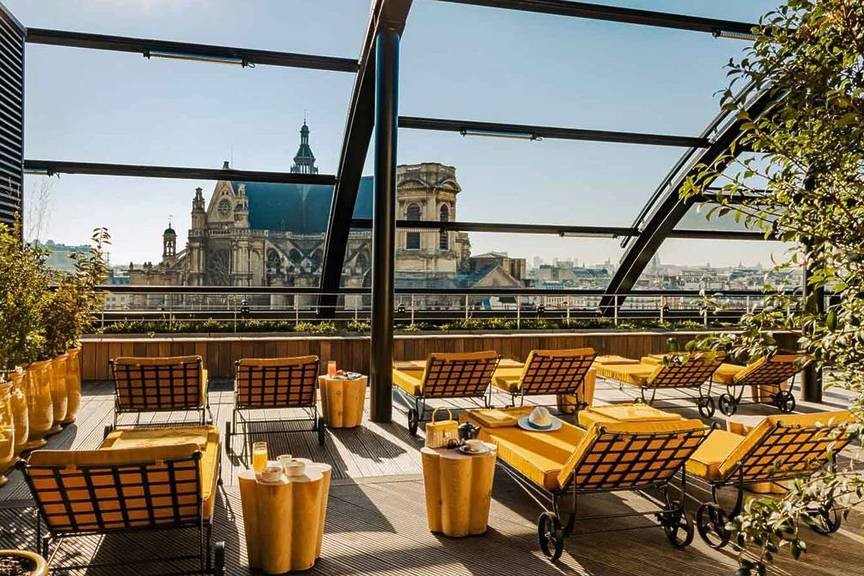
The public is not allowed on the Louvre’s roofs, which is why the view remains one of Paris’s best-kept secrets.
From the zinc slopes above the Cour Carrée you look straight down the axis that starts at the pyramid, shoots through the Tuileries, crosses Place de la Concorde, and ends eight kilometres away at the Grande Arche de la Défense. On clear days the Eiffel Tower pokes up to the left like an afterthought.
Maintenance crews climb up through narrow iron staircases hidden behind false doors. They eat lunch sitting on warm lead gutters while gulls circle overhead. In winter the city spreads white and quiet; in summer the slate turns almost too hot to touch.
The strangest sight is the forest of old chimneys—hundreds of them, many capped since the 19th century when the palace stopped burning wood. From the ground they are invisible. From above they look like a petrified city of their own.
Photographers sometimes beg for access. The museum almost always refuses. The roofs belong to the people who keep the building alive: roofers, stone masons, the men who still know how to mix lime mortar the way it was done in 1660. They wave at tourists far below and get back to work.