
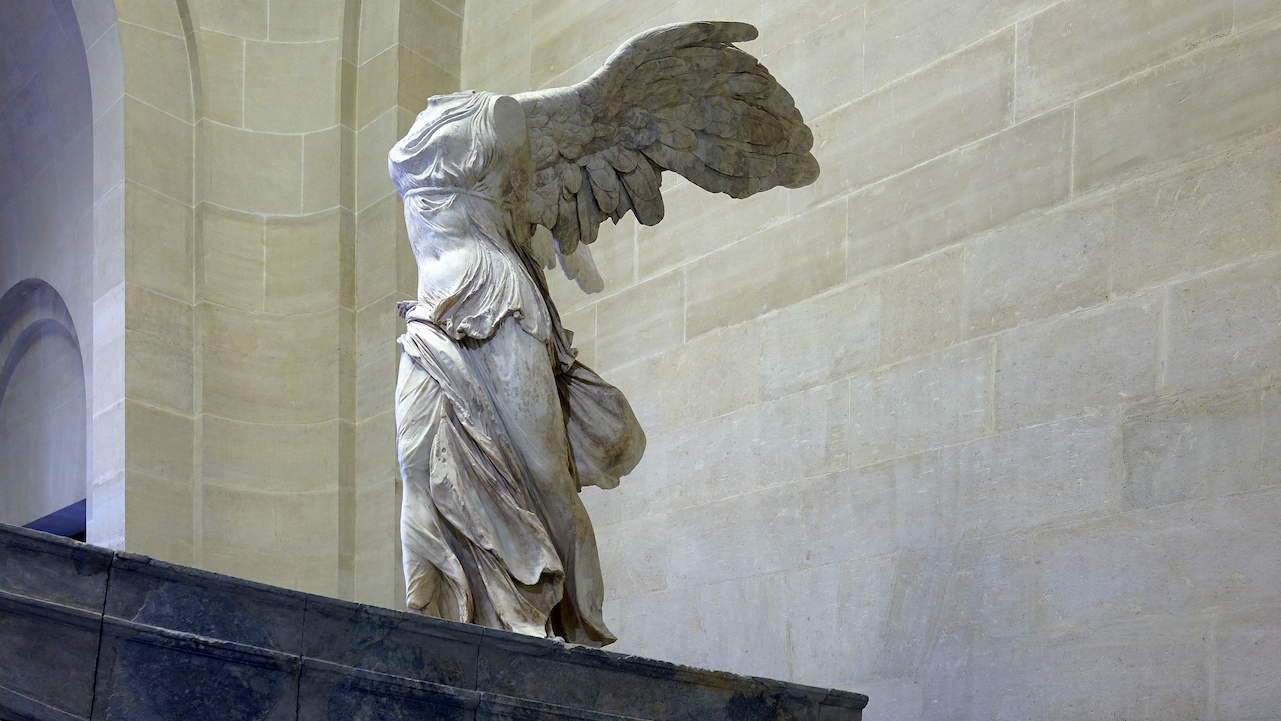
She lands forever and never quite touches the ground. The Winged Victory of Samothrace has stood at the top of the Daru staircase since 1884, wings spread, cloak pressed against invisible wind.
Sailors from Rhodes erected her around 190 BC to celebrate a naval battle. The prow of their ship was carved from gray marble, the figure herself from brilliant white. When French archaeologists found her in 1863, she lay in more than a hundred pieces on a hillside. Her head and arms were gone, probably lost centuries earlier.
Restorers rebuilt the wings using metal rods that are now rusting inside the stone. Every few decades engineers argue about taking her down for treatment. Visitors protest. She has become the symbol of the museum itself—damaged, triumphant, impossible to move.
Stand beneath her at closing time when the guards start switching off the lights. The marble catches the last glow from the windows and seems to move forward. Two thousand years after her victory, she still charges into battle, and the staircase is her sea.