
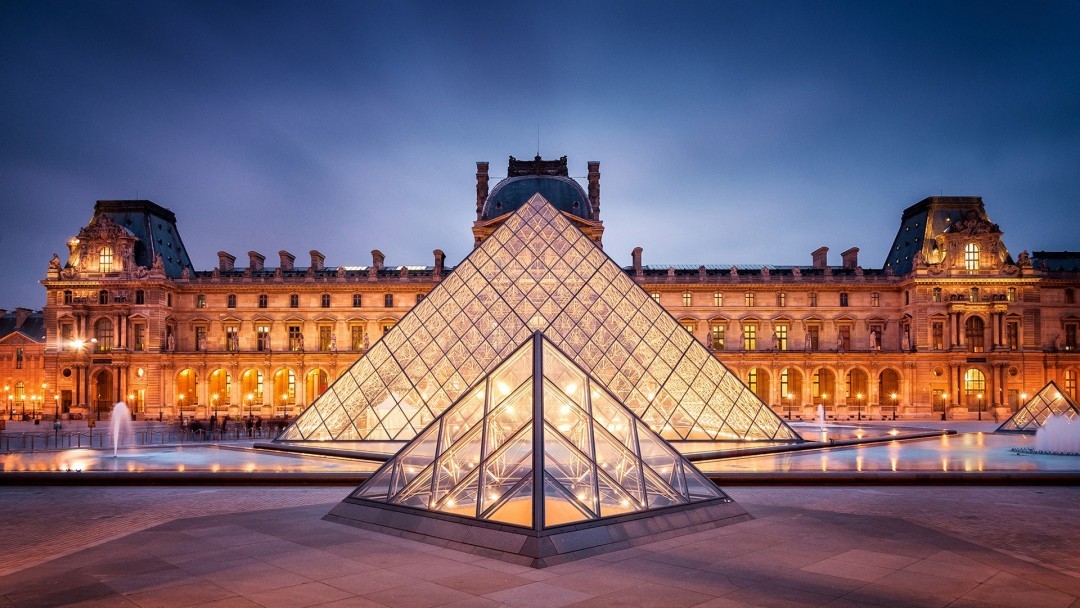
When François Mitterrand unveiled I. M. Pei’s glass pyramid in 1989, Paris reacted as if someone had parked a spaceship in the courtyard of its oldest palace. Thirty-six years later, the arguments have not died down.
The numbers alone sounded insane at the time: 673 glass panes, 95 tons of steel, 105 tons of aluminum, all floating above the new underground entrance. Critics called it a scar on French heritage. Jack Lang, Mitterrand’s own culture minister, privately admitted he hated it. Le Figaro ran a petition signed by intellectuals who compared the pyramid to a “gigantic gadget.”
Pei never claimed to copy history. He wanted light. The old palace had grown dark and confusing over centuries of additions. Visitors wandered lost for hours. The pyramid brought daylight into the basement and created a single clear entrance. Within five years, attendance doubled. The French stopped complaining about getting lost and started complaining about the queues instead.
Yet the real fight was never about function. It was about who decides what Paris should look like. The pyramid broke the rule that nothing new can ever be louder than the past. Today most Parisians say they like it, but every few years a politician rediscovers the old outrage and promises to cover it with plants or replace it with something more “French.” Nothing ever happens. The pyramid has outlasted them all, gleaming quietly while the city argues around it.