
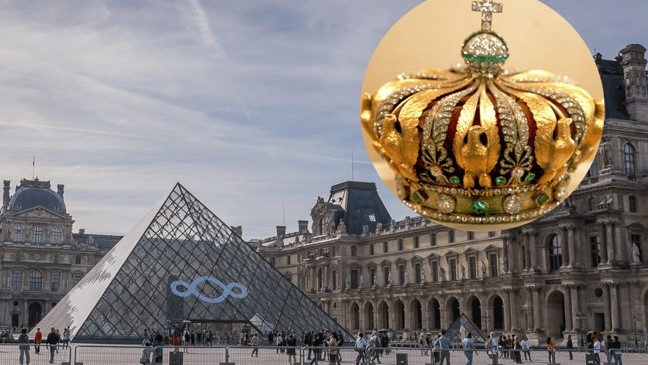
When Napoleon marched across Europe, art followed his armies home. By 1810 the Louvre had become the largest museum on earth, renamed Musée Napoléon for good measure. Most loot went back after Waterloo. Some pieces never left.
The four bronze horses above the museum’s Carrousel arch came from Venice in 1798. Napoleon liked them so much he had them shipped across the Alps by sled. Venice asked for them in 1815. France said no. They are still there, copies now glinting in the sun while the originals rest inside to escape pollution.
In the Egyptian wing stands a granite statue of Ramses II that French soldiers dragged out of Thebes in 1818. The same room holds the Zodiac Ceiling from the Temple of Dendera, cut from the roof with saws because it was too heavy to lift. Egypt has requested both back for over a century. Paris answers with polite silence.
The strangest survivor sits in the Near Eastern court: two gigantic winged bulls from Sargon II’s palace in ancient Assyria. French archaeologists excavated them in 1847, long after Napoleon, but the taste for monumental trophies never faded. Each bull weighs thirty tons and has five legs so it looks correct from both front and side. They guard an entrance that no longer exists, loyal to a king who vanished twenty-seven centuries ago.